Sensors for Payload Testing
Missions launching payloads into space require certainty that the structural integrity and robustness of onboard systems will survive the harsh conditions experienced during launch. PCB Piezotronics provides reliable and rugged sensors for environmental test engineers who need to test payloads and subsystems that must withstand extreme conditions. From accelerometers and pressure sensors that withstand temperatures from-452F to 1400F, to thermal vacuum environments, vibration measurements from micro-g jitter to 200,000 g shock, and acoustic levels exceeding 200 dB, our sensors are trusted assets in environmental test labs worldwide.
Reliable Results Under Extreme Conditions
Every component within a spacecraft must operate flawlessly. That's why payload testing involves simulating the conditions experienced during launch, orbital insertion, and re-entry if the mission demands it. PCB Piezotronics' sensors are specifically designed to support mission success by:
- Handle High Acceleration Events: Measure extreme shock up to 200,000 g.
- Operate in Ultra-Clean Environments: Feature low-outgassing, NASA-approved materials to protect sensitive payloads from contamination in vacuum environments.
- Capture Multi-Axis Response: Provide 3-component force measurements for force-limited vibration (FLV) testing and triaxial vibration solutions.
- Maintain Precision: Deliver accurate measurements even in extreme acoustic and vibration environments.
By capturing precise data in challenging testing environments, engineering teams can validate design margins in controlled laboratory testing and ensure performance on launch day, ultimately reducing risk and increasing mission success.
Payload Sensor Types by Application
Vibration Qualification Testing
Before launch, payload components undergo rigorous vibration testing to confirm their readiness for flight liftoff. Sensors for payload vibration qualification include:
- 3-Component Force Sensors: Measure forces along x, y, and z axes; vibration testing is controlled through force-limiting, protecting critical hardware from over-testing.
- Low-Outgassing Accelerometers: Hermetically sealed single-axis and triaxial accelerometers, combined with low-outgassing cables, provide contaminant-free performance essential for vacuum environments—from TVAC testing to spaceflight applications.
- Vibration Test of CubeSats: The Modal Shop's Electrodynamic Shaker System, Model K2500E500, is a 500 lbf pk sine-force shaker system designed to test mission-critical components and CubeSats up to 3U in size.
These combined solutions provide essential data on how space hardware will respond to the anticipated launch environment, enabling design teams to mitigate risks and optimize payload reliability before integration to the launch platform.
Vibro-Acoustic Stress Testing
Rocket launches generate high-intensity noise and vibrations that can damage sensitive payload components. Our precision microphones and acoustic pressure sensors are used to monitor and control acoustic output in reverberant chambers or in Direct Field Acoustic Noise (DFAN) testing.
- Control acoustic test outputs with microphones capable of measuring up to 182 dB
- Validate and monitor that the intended acoustic levels are achieved throughout the test environment
- Monitor onboard up to 188 dB, inside the fairing environment during launch to ensure conditions are as expected.
With high sensitivity and precision, these sensors provide actionable insights that help engineers refine payload designs for peak performance.
Stage Separation
During stage separation, fairing jettison, or deployment of solar panels, payloads endure extreme shock events caused by the separation mechanisms activating. Whether they are pyrotechnic, pneumatic, or spring-type separation events, PCB's shock accelerometers are specifically engineered to accurately measure these high-amplitude events by offering:
- Industry's Highest Measurement Range: Amplitudes from 5 kg up to 200 kg and flat frequency response to 20 kHz required for SRS testing.
- Rugged Construction: Withstands sudden, high-impact loads without sacrificing accuracy. Mechanical or gas damping and electrical filtering ensure the ultimate reliability in sensor longevity and data quality.
- Quality Calibration: Every shock sensor comes standard with a calibration certificate compliant to MIL-STD-810 requirements.
By precisely measuring expected shock levels in a laboratory setting, engineering teams can ensure onboard systems are robust enough to reduce the risk of critical system failures during launch.
Choose PCB for Complete Payload Testing Solutions
PCB Piezotronics supports comprehensive test programs with complete testing solutions for space missions. To discuss specific applications, please contact us or request a quote.
Featured Payload Sensors, Electronics, and Cables:
Low Outgassing ICP® Accelerometers and Cables for Thermal Vacuum Vibration Testing
Piezoresistive & Piezoelectric Shock Accelerometers for Stage Separation Testing
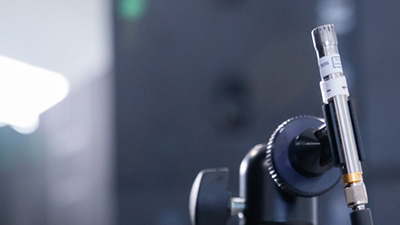
Rugged Microphones for DFAN Testing
Force Rings, Force Links, and Summing Electronics for FLV Testing
Vibration Shaker Kit for Small Satellite Testing